 Racquel Rossbach
Seeking Medical Care Abroad: Why Your First Visit Matters
Sick or Injured Abroad? Why Your First Doctor Visit Shouldn’t Wait Until Home
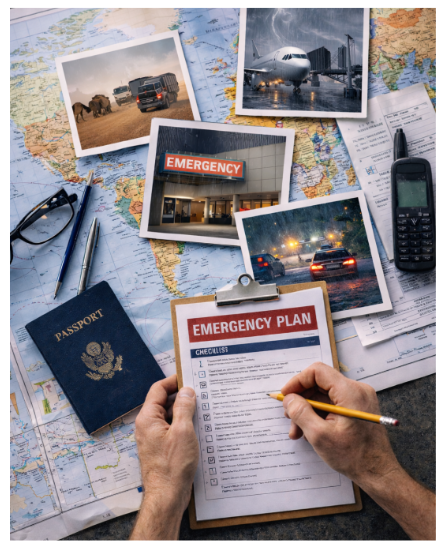
Safe Passage is most useful when you treat it like a readiness checklist. Use it before departure to train leaders and travelers, during travel as a quick-reference guide, and after travel to organize documentation and next steps.

MissionSafe designed Safe Passage to be used like a practical toolkit, not something you read once and forget. Whether you travel as part of a group or manage travel for others, Safe Passage helps you build a repeatable plan.
A simple first step is to bookmark the Safe Passage library page and share it with your trip leaders as part of your travel prep process.

Use Safe Passage to prepare for the scenarios that create the most stress and confusion.
Many leaders also keep the Traveler’s Toolbox saved on their phone or printed in a folder so checklists and other key resources are easy to access during travel.
Common high-impact topics include hospitalization abroad, emergency medical evacuation coordination, and trip interruption decisions.
When an incident happens, stress compresses time. Safe Passage helps you move quickly with clarity.
If you are traveling with or managing international groups, it helps to review how your travel medical insurance plans coordinate assistance and what steps can prevent delays when time matters.
After the trip, Safe Passage helps you shift from crisis mode to clean follow-through.
For trip disruption scenarios, referencing your trip cancellation and interruption coverage can help clarify what is time-sensitive, what documentation is needed, and what next steps make sense.
How does Safe Passage help travelers during a medical emergency abroad?
Safe Passage outlines practical first steps, including who to contact, how to coordinate assistance, and what documentation to collect.
What should a trip leader do first during a travel emergency?
Start with immediate safety and medical needs, then contact the appropriate assistance and support, and begin documentation. Safe Passage presents the common steps and sequence.
What documents matter most while traveling?
It depends on the scenario, but receipts, medical records, and travel change confirmations are common. Safe Passage provides scenario-specific checklists.
How can Safe Passage reduce claim delays?
It helps train travelers and leaders to document correctly in real time and follow common coordination procedures, which supports a smoother claims process.



Sick or Injured Abroad? Why Your First Doctor Visit Shouldn’t Wait Until Home

As the deadline for the Leave Your Mark Contest approaches on September 13th, it is easy to assume your story is not big enough or finished enough to...

With the Leave Your Mark Contest deadline approaching on September 13th, it is easy to assume you don't have enough time to put together a solid...