Finding Strength in the Mission: How 2025 Grant Recipient Savanna Kept Going
As the deadline for the Leave Your Mark Contest approaches on September 13th, it is easy to assume your story is not big enough or finished enough to...
4 min read

What are the best resources for managing summer team travel?
Effective preparation requires a combination of clear insurance documentation, immediate access to emergency support, and robust duty of care training. Key tools include the MissionSafe Traveler’s Toolbox, QR-coded Passport Stickers for support resources, and comprehensive team briefings that cover international medical realities and risk management.
Summer is the peak season for international group travel. Whether you are leading a service team, a student group, or a specialized project, the complexity of managing multiple travelers in a foreign environment requires more than just a flight itinerary.
True duty of care means providing your team with the tools they need to navigate the unexpected before a crisis occurs. At MissionSafe, we believe preparedness is a leadership responsibility, starting at the organization level. To help you lead with confidence this summer, we have compiled the essential resources every organization should utilize.
The first 24 hours of a travel emergency are the most critical. The Traveler’s Toolbox is a curated digital resource center designed to support travelers and leaders in real time. It provides instant access to emergency contact numbers, claims guidance, and practical steps for navigating high-stress situations.

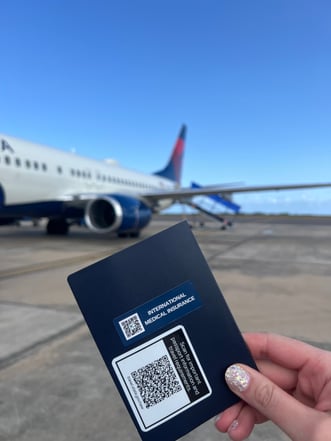
Communication is often the first thing to fail in an international medical emergency. For our clients, the Passport Sticker acts as a physical safety net. This small, QR-coded sticker is applied directly to the traveler’s passport, providing a single, visible point of access for help.

Education is a preventative tool. Our Safe Passage series uses real-world case studies to help leaders understand the nuances of international claims, exclusions, and medical logistics.

Before departure, review the U.S. Department of State International Travel Checklist. It includes important reminders about passports, visas, medications, legal documents for minors, driving abroad, and emergency planning.
The State Department recommends making multiple copies of important travel documents, leaving one set with a trusted person at home, keeping a separate set with you, and taking photos of key documents on your phone.
Pro-Tip: Share this checklist with your travelers well in advance of the trip! Keep copies of their important documents, including passports, IDs, visas, medical records, and insurance cards on file with your organization. MissionSafe's MissionsIQ platform provides a great option for this secure storage.
Helpful links:
The Smart Traveler Enrollment Program, or STEP, allows U.S. travelers to receive alerts and updates from the U.S. embassy or consulate in their destination country. STEP can also help the embassy contact travelers or their emergency contacts during an emergency.
This is especially useful for teams traveling to regions where weather, demonstrations, political unrest, health concerns, or transportation disruptions may affect travel plans.
Pro-Tip: Add STEP enrollment to your pre-trip checklist and assign one leader to monitor embassy alerts during travel.

Before your team leaves, check the CDC Travelers’ Health destination pages for country-specific health recommendations. These pages can help travelers understand vaccine recommendations, medication considerations, food and water guidance, insect precautions, and other destination-specific health risks.
You can also monitor CDC Travel Health Notices, which are used to inform travelers about global health risks during outbreaks, natural disasters, mass gatherings, and other events that may affect health and safety.
Helpful links:
Even well-planned trips can include unexpected medical needs, lost documents, travel disruptions, or emergency decisions. Before departure, make sure your travelers and team leaders know the basic steps to take if an incident occurs.
At minimum, your team should know:
A simple incident-response plan can reduce confusion in the moment and help travelers avoid missing important steps that may affect support, reimbursement, or follow-up care.
MissionSafe client resource: MissionSafe clients can download the Incident Checklist, a quick-reference guide that walks travelers through what to do for non-emergency outpatient care, emergency medical situations, pre-certification, evacuation approval, Guarantee of Payment requests, and claim filing.
Pro-tip: Share the checklist before departure, save it in your team chat, and make sure at least one team leader has an offline copy.
 The MissionSafe Connection
At MissionSafe, we operate as a white-glove partner, not just a policy provider. We understand that sending organizations and nonprofits face unique risks when sending teams abroad. Our role is to provide the human-centered advocacy and technical tools, like the MissionsIQ platform, as well as a variety of top-tier coverage options like our proprietary IQ Gold plan, that empower you to fulfill your duty of care.
We help you plan smarter, respond faster, and support your travelers with the clarity they deserve.
Prepare Your Team for Summer Success. Don't wait until an emergency to discover the gaps in your travel plan.

As the deadline for the Leave Your Mark Contest approaches on September 13th, it is easy to assume your story is not big enough or finished enough to...

With the Leave Your Mark Contest deadline approaching on September 13th, it is easy to assume you don't have enough time to put together a solid...

Meet 2025 Leave Your Mark Grant recipient Megan Parham Mwenda and learn her story of why she finally decided to apply.