Finding Strength in the Mission: How 2025 Grant Recipient Savanna Kept Going
As the deadline for the Leave Your Mark Contest approaches on September 13th, it is easy to assume your story is not big enough or finished enough to...
3 min read
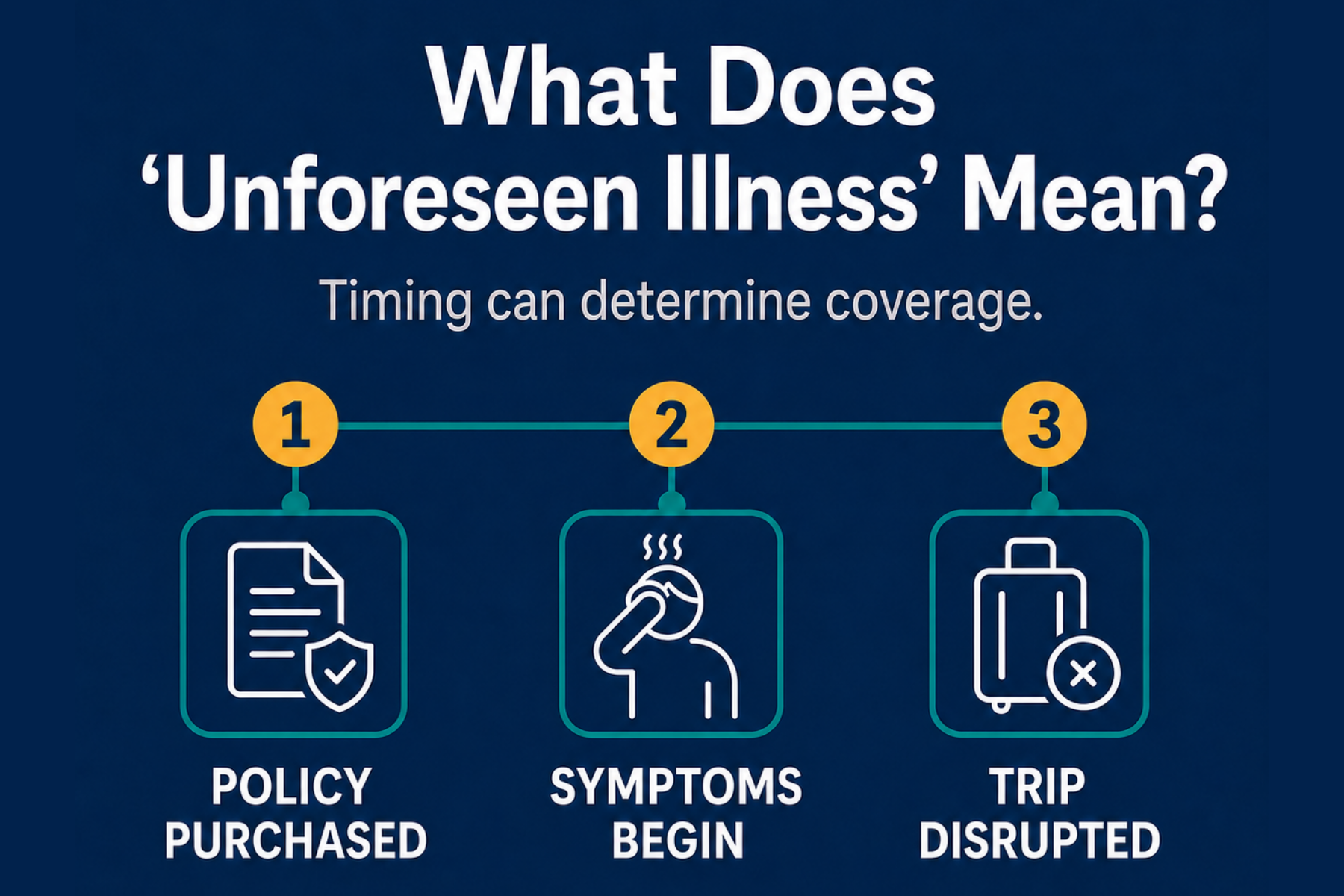
Conversationally, the definition of "unforeseen" is easy to understand. An unforeseen event surprises you; you didn't expect it; you literally do not see it coming. You might assume that an illness is considered "unforeseen" if it takes you by surprise. However, this interpretation isn't always accurate in the insurance industry.
To you, your new diagnosis might be shocking, and your trip cancellation may feel sudden and overwhelming. But insurance companies don’t make decisions based on surprise and emotion.
Insurance policies usually define “unforeseen” in relation to what was known, suspected, or already developing when you bought the policy.
A condition may not be considered unforeseen (AKA it was known or reasonably foreseeable) if, before purchasing coverage:
Trip cancellation insurance is designed to protect you and your trip cost against future, unknown events.
Buying travel insurance after you get sick is like trying to buy car insurance while watching your engine smoke on the side of the highway. Even if the actual diagnosis and cancellation happen in a sudden panic, the insurer will trace the paperwork back to day one to see exactly what you knew, and when you knew it. Those facts determine if it was a known or foreseeable event.
Here are a few simple examples to help us understand the insurance company's definition of "unforeseen" and the importance of timing in the purchase of a trip cancellation policy.
You buy travel insurance in January.
In March, you suddenly develop appendicitis and are hospitalized.
👉 This is typically considered unforeseen at the time of purchase.
On May 20, you began experiencing chest pain and scheduled tests.
You buy insurance on June 1.
On June 10, you are diagnosed with a heart condition and must cancel your trip.
👉 The insurer may determine this was not unforeseen when coverage began.
You have a chronic condition (e.g., Crohn’s disease).
Before buying insurance, your doctor notes it is stable.
After purchase, you experience a sudden severe flare requiring hospitalization.
👉 Coverage may depend on whether the flare was considered unpredictable versus part of an ongoing known issue.
You feel unwell for several days before buying insurance.
You purchase coverage anyway, then see a doctor.
You share when your symptoms started, and the doctor advises you not to travel.
👉 This is often treated as a pre-existing or foreseeable condition, not an unforeseen event.
You and your spouse are going on a once-in-a-lifetime European cruise. You buy your policy just after you book the cruise. At the time you buy the policy, all immediate family members are healthy and happy.
A week before your departure, your Mom suddenly suffers a severe stroke and is hospitalized. She had no prior warning signs, symptoms, or ongoing treatment. You decide to cancel your trip to provide care and support.
👉 In this case, the event is typically considered clearly unforeseen at the time the policy was purchased, and may be eligible for coverage under trip cancellation provisions for a covered family member’s unexpected illness or injury, subject to the specific policy terms and conditions.
A simple way to think about it:
If your illness was already “in motion” before you bought coverage, it probably won’t be considered unforeseen. That means it probably won't be covered by your trip cancellation policy.
Many claim denials are not about how serious the illness is. They are about timing and foreseeability at the moment coverage begins.
That’s why two travelers with similar medical situations can have very different outcomes depending on:
See how this concept applied in a real claim.
Read our latest Safe Passage Case Study, "When Timing Determines Coverage."

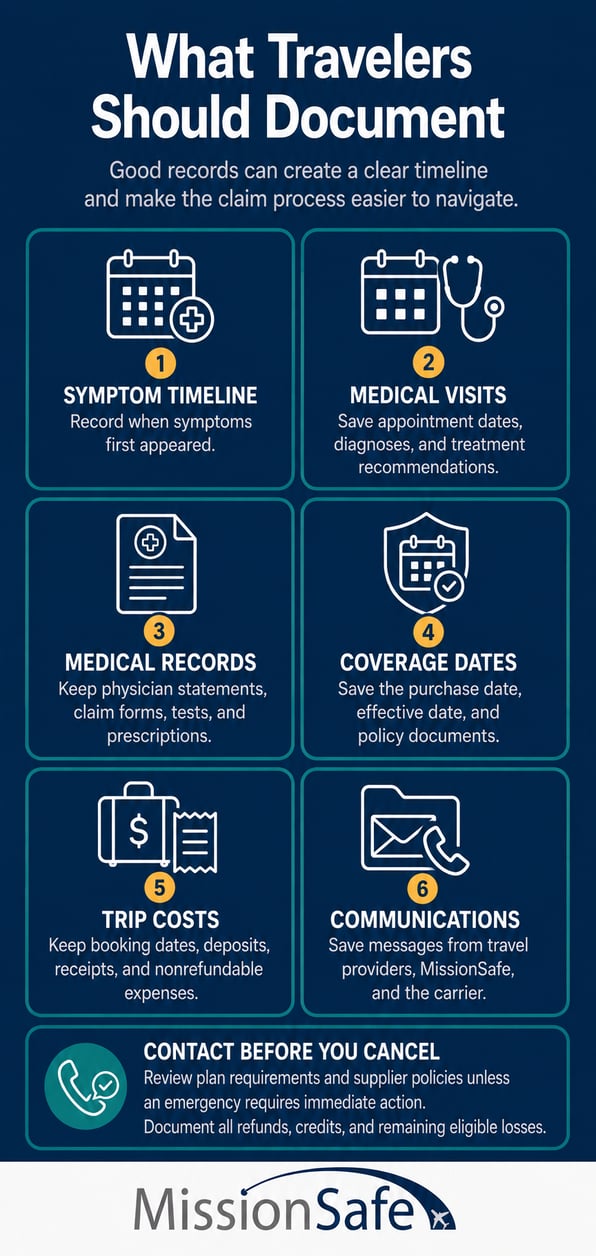
Timing is everything when protecting your travel investment. Contact MissionSafe to speak with an expert, or explore and purchase your trip cancellation plan before your journey begins.
This content is for educational purposes only. Coverage terms, definitions, and exclusions vary by policy. Claim determinations are made by the insurance carrier based on the specific facts and policy language.

As the deadline for the Leave Your Mark Contest approaches on September 13th, it is easy to assume your story is not big enough or finished enough to...

With the Leave Your Mark Contest deadline approaching on September 13th, it is easy to assume you don't have enough time to put together a solid...

Meet 2025 Leave Your Mark Grant recipient Megan Parham Mwenda and learn her story of why she finally decided to apply.